
Plumbing service
Whole-Home Repiping
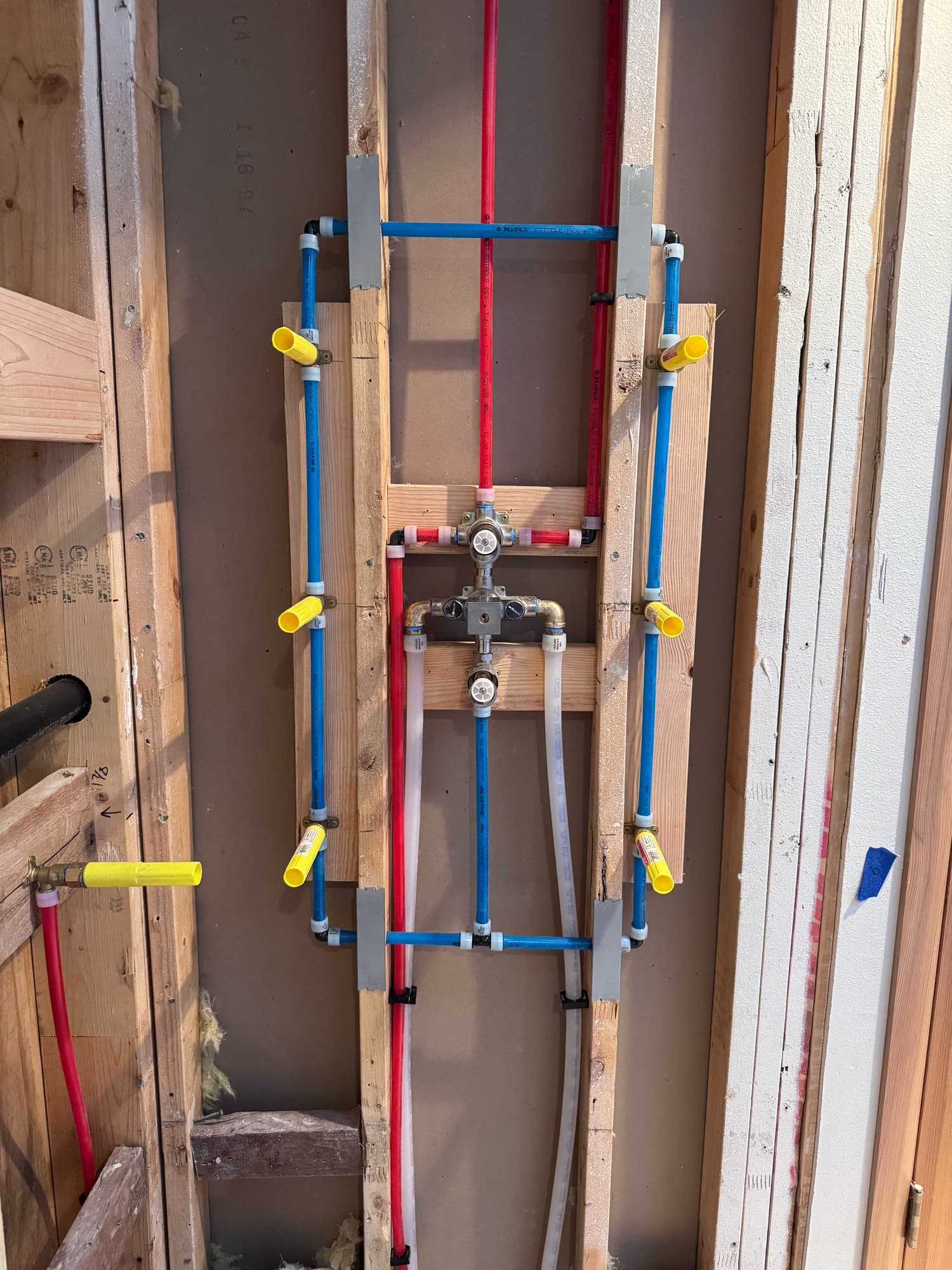
Materials: PEX or copper.
Key facts
- Materials
- PEX or copper
- Typical timeline
- 1–2 days for most homes
- Replaces
- Galvanized steel & polybutylene
- Pricing
- Fixed price with a written scope
What's included
Our repiping service.
- Whole-home PEX or copper repipe
- Galvanized steel and polybutylene replacement
- New shutoff valves at fixtures
- Small, planned access openings to limit wall damage
- Pressure test of the new system
- Written scope, fixed price and warranty
Our process
How it works.
- 01
Inspect and scope
We check what you have now, where it runs, and how to reach it with the fewest openings.
- 02
Fixed price
You get a written scope of work and a fixed price, with the schedule, before anything starts.
- 03
Repipe
New lines are run and connected with the house protected. Water is off only while we make the switch.
- 04
Test and walk through
We pressure-test the whole system, then walk you through everything we did.
Why it matters
Done right, the first time.
Clean water, good pressure
Corroded galvanized pipe narrows inside and rusts. New lines bring back full flow and clear water.
Stop the next leak
When old pipe starts leaking in one place, other sections usually aren't far behind.
Insurance & resale
Some insurers and buyers balk at polybutylene or galvanized plumbing. A documented repipe removes the question.
Decades of service
Properly installed PEX and copper are built to last for decades.
Does my home need repiping?
Galvanized steel supply pipe was common in homes built before about 1960; it corrodes from the inside, which shows up as rusty water, falling pressure and pinhole leaks. Polybutylene, a gray plastic pipe installed from roughly 1978 to 1995, is known for failing without warning.
If you're seeing more than one leak a year, discolored water, or pressure that's dropped throughout the house, a repipe usually costs less over time than chasing leaks. We'll tell you honestly if spot repairs will do.
Pricing
What does repiping cost?
What affects the price
- Size of the home and number of bathrooms and fixtures
- PEX versus copper
- Access: crawlspace, basement, slab, or finished ceilings
- Number of stories and wall openings needed
- New shutoffs, hose bibs, or a new main line
- Drywall patching scope and permits where required
Members pay less: the Dam Good Defenders Club waives dispatch fees and takes 10–15% off every repair. See membership
Good questions
Repiping FAQ.
Don't see your question? Call or text (425) 845-3535. A real person answers, 24/7.
How long does a whole-home repipe take?
Most homes are repiped in one to two days. Larger homes, multiple stories or hard-to-reach runs can take longer. You get the timeline with your fixed price before work starts, and your water is off only while we switch over.
PEX or copper: which is better?
Both are good. PEX is flexible, has fewer fittings, tolerates freezing better than rigid pipe and usually costs less to install. Copper is rigid, durable and long-proven. We'll recommend what fits your home, water and budget.
How do I know if I have polybutylene or galvanized pipes?
Polybutylene is usually gray (sometimes blue or black) flexible plastic, often stamped PB2110, and was installed from about 1978 to 1995. Galvanized is dull gray steel with threaded fittings. Check near the water heater, under sinks or where the main enters the house, or have us look.
Service areas
Repiping near you.
Farther afield, by appointment
Often paired with
Related services.

Plumbing problem? Let's fix it right.
Free estimates, upfront flat-rate pricing, and a 24/7 emergency line at (425) 845-3535.