Repiping
Whole-House Repiping in Snohomish County: Is It Time? What Drives the Cost
· Updated · 4 min read · Beaver's Plumbing
What is whole-house repiping?
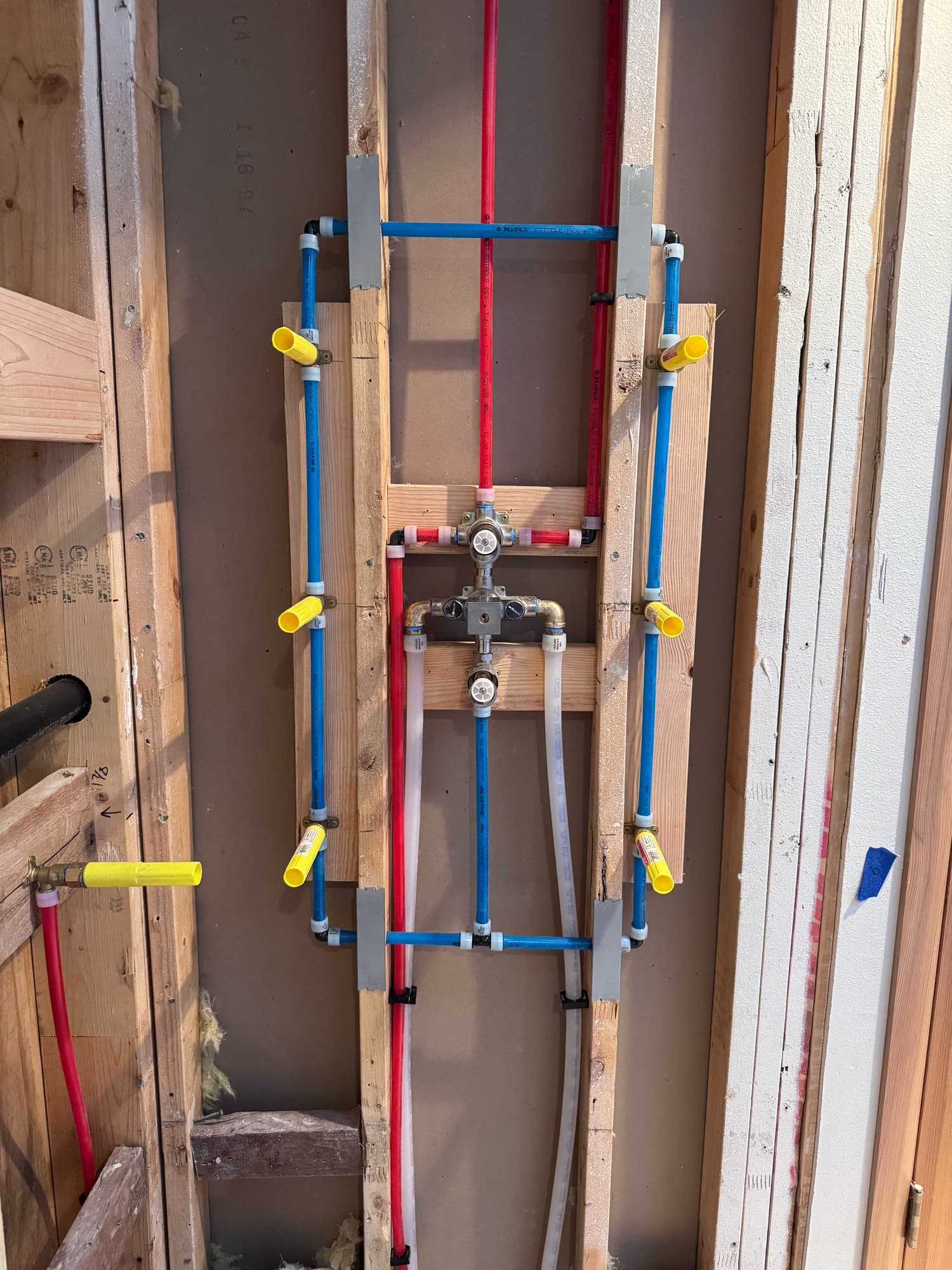
Whole-house repiping replaces all of the water supply lines in your home: the pipes that carry fresh water from the main shutoff to every faucet, toilet, shower and appliance. It doesn't include drain lines, which are a separate project.
Repiping usually makes sense when the existing pipes are galvanized steel (which corrodes from the inside out), polybutylene (a plastic pipe with a long history of failures), or copper that keeps springing leaks.
Home age is the first clue. Across Snohomish County, the median home was built in 1990; about 12% of homes were built before 1960 and about 35% before 1980 (U.S. Census Bureau, American Community Survey 2020–2024).
5 signs your Snohomish County home needs repiping
- Rusty or brown water, especially first thing in the morning. In galvanized pipes, that's rust from the inside of the pipe.
- Low water pressure throughout the house, not just at one fixture. Galvanized pipes narrow as rust builds up inside them.
- Frequent leaks. If you've had two or more pipe leaks in the past few years, the rest of the pipe is likely in similar condition.
- Visible corrosion on exposed pipes. Check under sinks, in the crawlspace and around the water heater.
- Original galvanized or polybutylene pipe. Galvanized steel supply pipe was common in homes built before the 1960s, and polybutylene was installed in many homes from 1978 to the mid-1990s. If either is still in your walls, plan on replacing it.
Not sure what kind of pipes you have?
PEX vs. copper: which is better for Western Washington homes?
PEX (cross-linked polyethylene) is the go-to material for most residential repipes today. It's flexible, so it snakes through walls with fewer openings; it installs faster and costs less than copper; and it resists freeze damage better than rigid pipe, which helps in cold crawlspaces (it should still be insulated there).
Copper is the traditional choice. It's durable, handles high temperatures well and has a long track record. It costs more than PEX and takes more labor to install.
For most Snohomish County homes, we recommend PEX for its mix of performance, freeze tolerance and value. If you prefer copper, ask us to price both so you can compare.
What drives whole-house repiping cost
Cost depends on home size, pipe material and access (a crawlspace is easier to work from than a slab):
- Home size: more square footage, bathrooms and fixtures mean more pipe and more labor
- Pipe material: PEX costs less than copper and installs faster
- Access: homes on a slab cost more, because new lines run through walls and ceilings instead of a crawlspace
Every home is different, so we price each repipe after a free estimate at your home: a written flat-rate price that includes labor, materials, permits and drywall patching. Request a free estimate, or read what goes into repiping a house in Monroe.
The repiping process: what to expect
A typical whole-house repipe of a 1,500–2,000 sq ft home takes 2–3 days:
- Day 1: Shut off the water and run new PEX or copper lines through the walls and crawlspace.
- Day 2: Connect every fixture, install new shutoff valves and pressure-test the system.
- Day 3 (if needed): Patch drywall and complete the permit inspection.
Expect to be without water for roughly 6–8 hours on the first day; we schedule the shutoff to keep the disruption short. A repipe needs a plumbing permit and inspection from your city or, in unincorporated areas, from Snohomish County Planning and Development Services. Learn more about our repiping service in Snohomish County.
Ready for a repiping quote?