Emergency plumbing
Emergency Plumber in Western Washington: What to Do Before We Arrive
· Updated · 4 min read · Beaver's Plumbing
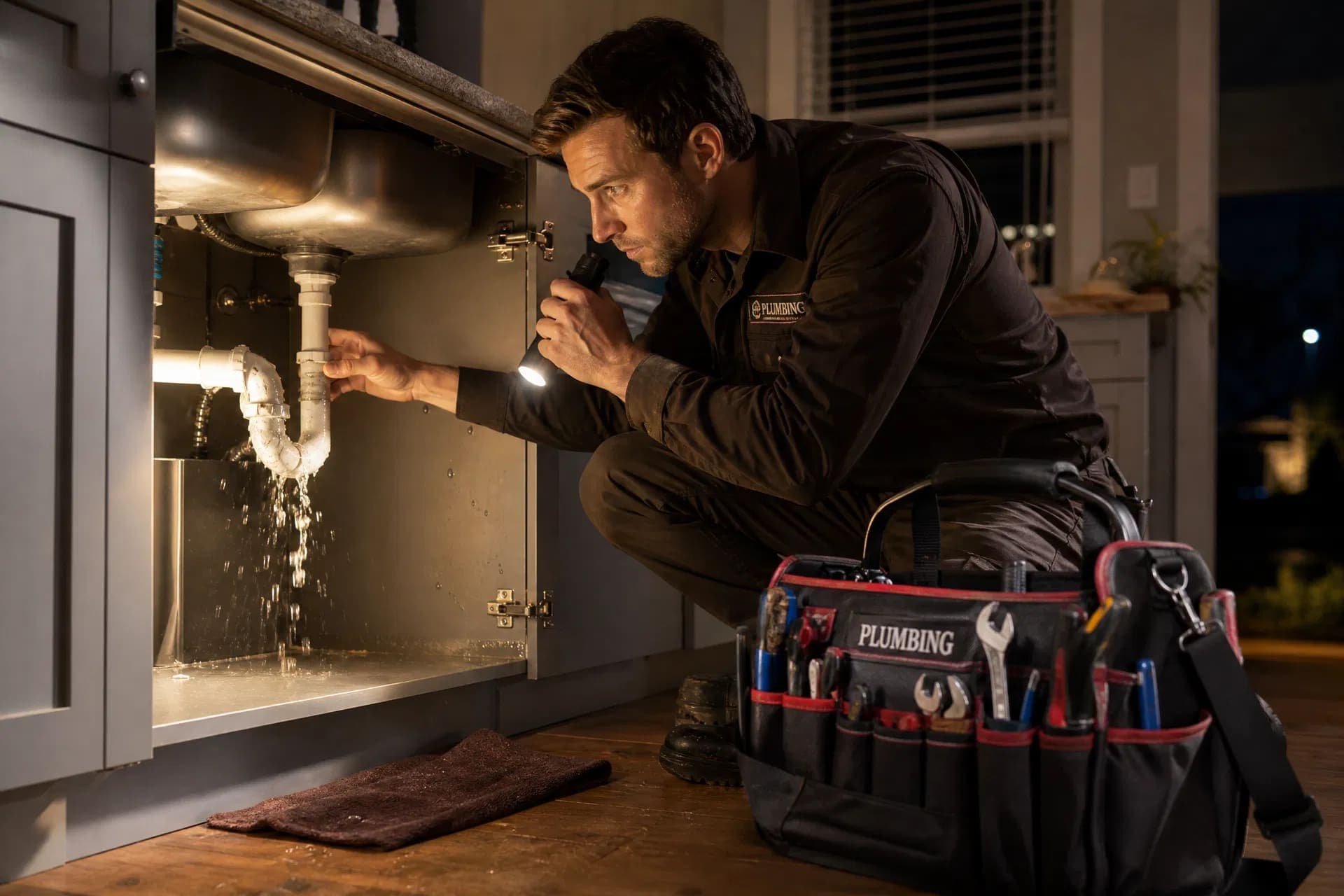
Step 1: Shut off the water
For any emergency involving running water, such as a burst pipe, a failed supply line or an overflowing toilet, your first move is to stop the water.
For a single fixture: Close the shutoff valve under the sink or behind the toilet. Turn a round handle clockwise until it stops; turn a lever handle a quarter turn so it sits across the pipe.
For the whole house: Close the main shutoff. It's usually where the water line enters the house, often in the garage, a utility room or the crawlspace. If you can't find it or it won't turn, the valve at the water meter near the street can shut off the supply (it may take a meter key).
If you don't know where your main shutoff is, find it now, before you need it.
Step 2: Turn off the water heater
Once the main is off, turn off the water heater too, especially if water has drained out of the pipes. An electric heating element that runs without water around it can burn out. For a gas unit, turn the control to 'pilot' or 'off.' For an electric unit, switch off its breaker.
Step 3: Contain the damage
While you wait for us:
- Put towels, buckets or plastic sheeting under active leaks
- Move electronics, furniture and valuables away from wet areas
- If water has reached outlets, cords or the electrical panel, stay out of the area, and call 911 if anyone is in danger
- Take photos and video of all the damage for your insurance claim
- Open windows and doors to start drying, if the weather allows
Report water damage to your insurer quickly. Washington's Office of the Insurance Commissioner notes that homeowners policies usually cover sudden leaks and burst pipes (including frozen pipes, if the home was properly heated), but often not gradual leaks.
Common plumbing emergencies in Western Washington
Burst pipes: Hard freezes aren't common here, but arctic cold snaps can freeze pipes in uninsulated crawlspaces, garages and exterior walls anywhere from Seattle to Monroe, Sultan and Gold Bar. A burst pipe releases water fast, so shut off the main first.
Sewer backups: Usually caused by roots, grease or a broken section of the side sewer (the pipe from your house to the street). Heavy rain can make it worse when groundwater seeps into cracked older pipes. Learn more about our sewer line service.
Water heater failures: A leaking tank or a discharging relief valve can flood a utility room or garage quickly. Close the cold water valve above the heater, then turn off its power or gas.
Toilet overflows: Usually a clog. If the bowl keeps filling, close the valve behind the toilet or lift the float in the tank to stop the water.
Plumbing emergency right now?
What happens when you call Beaver's Plumbing for an emergency
We answer emergency calls 24 hours a day, 7 days a week, including nights, weekends and holidays. When you call:
- We ask a few quick questions so we can send the right technician with the right parts
- We give you an honest arrival estimate based on where our team is
- You get a written flat-rate price before any work starts, even at 3 a.m.
- We document the problem and the repair for your insurance claim if you need it
Emergency visits carry a dispatch and diagnostic fee, higher outside business hours (weekdays from 5 p.m. to 8 a.m., and weekends), and we tell you what it is before we send anyone. Dam Good Defenders Club members don't pay it.
We serve Snohomish County, King County and communities across Western Washington. Learn more about our 24/7 emergency plumbing.
Save our number before you need it